
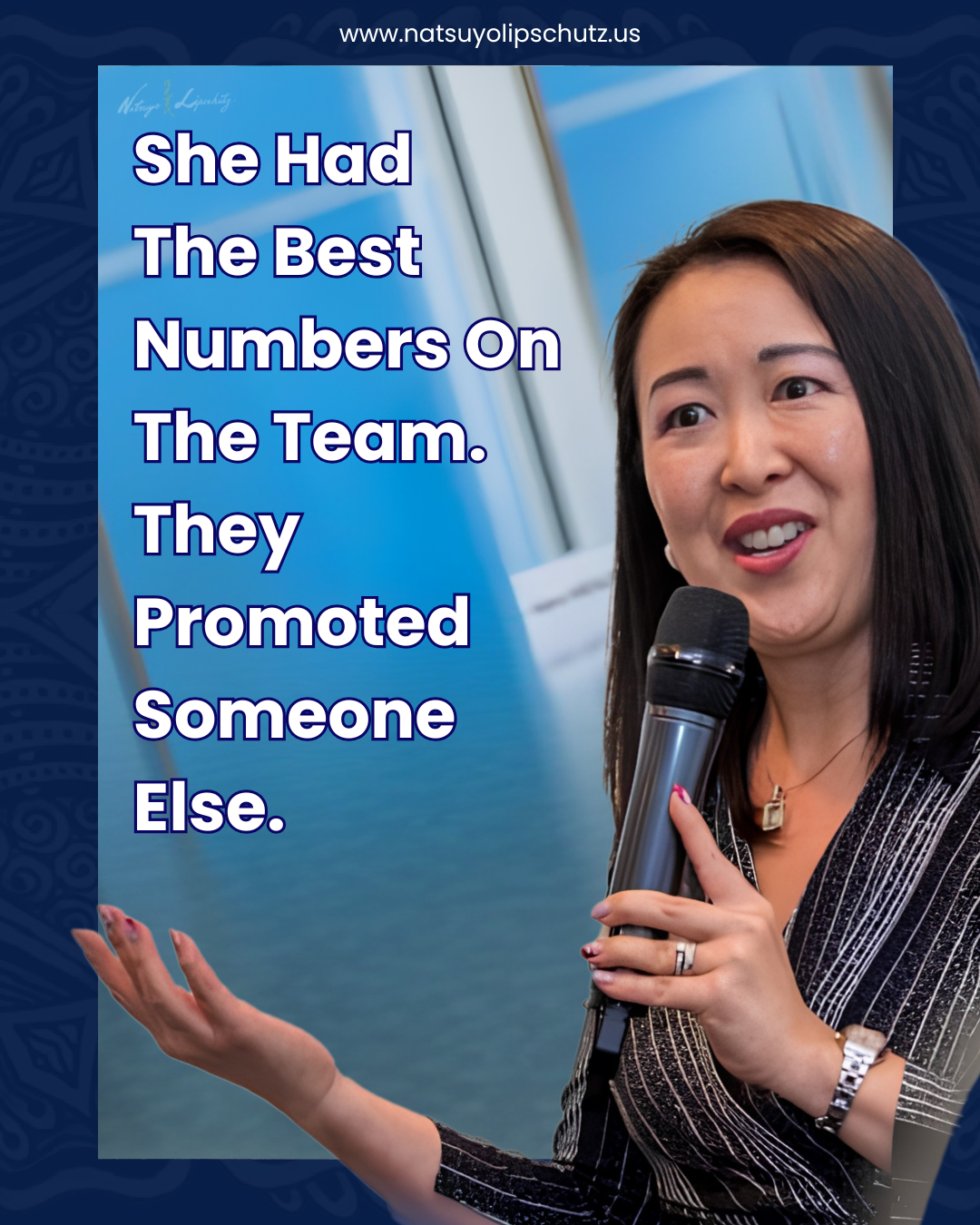
Why your highest-performing global employees keep getting passed over and what it is actually costing your organization.
—
She had the highest client retention numbers on the team.
Three consecutive years.
Her project delivery was flawless.
Her colleagues respected her deeply.
And when the senior leadership position opened up
She was passed over.
For someone with lower numbers.
Less experience.
But more visibility.
—
When she called me
She wasn’t angry.
She was exhausted.
“Natsuyo, I have done everything right. I deliver. I never miss a deadline. I never complain. What am I missing?”
I told her the truth.
“You have been playing by a rulebook that was never designed for you.”
—
Here is what nobody tells high-performing global professionals.
In most Western corporate environments
Performance is not enough.
Visibility is the currency.
And visibility has a very specific cultural dialect.
Speaking up in large meetings.
Volunteering opinions before they are fully formed.
Claiming credit loudly and publicly.
Positioning yourself as the obvious choice before the decision is ever made.
For professionals from cultures that value collective harmony
Careful listening over vocal presence.
Letting results speak instead of self-promotion.
Elevating the team before the individual.
These behaviors are not professional liabilities.
They are deeply held values.
But in environments that reward visibility over results
They become invisible barriers.
And the leaders making promotion decisions never even realize it is happening.
—
The cost nobody is calculating.
When high-performers get passed over for culturally misaligned reasons
They don’t always leave immediately.
They disengage quietly.
They stop volunteering insights.
They stop taking initiative.
They do exactly what is required.
Nothing more.
Organizations call this a performance issue.
It is a leadership failure.
The talent was always there.
The environment never learned how to see it.
—
Three moves for leaders who want to fix this now.
Separate visibility from performance in your evaluation criteria.
If your promotion framework rewards “executive presence” without defining what that means across cultures
You are not evaluating performance.
You are evaluating cultural fluency in one specific cultural dialect.
Redefine executive presence to include:
Depth of strategic thinking.
Quality of written communication.
Influence demonstrated in small group settings.
Consistency of results over time.
Create structured visibility opportunities.
Not every high-performer thrives in a large town hall.
Build visibility pathways that don’t require someone to dominate a room.
Written strategy memos shared with senior leadership.
Small group presentations with a prepared format.
Mentorship assignments that put their expertise on display.
Give feedback on the unwritten rules explicitly.
Stop assuming global professionals know the visibility game.
Tell them directly:
“In this organization, sharing your perspective in leadership meetings is not optional. It is how decisions get made. Let me show you how to do it in a way that feels authentic to you.”
That conversation takes ten minutes.
It changes everything.
—
The bottom line
Your quietest high-performer is not waiting to be discovered.
They are waiting for a leader who knows how to look.
The organizations that learn to see performance across cultural expressions
Don’t just retain their best global talent.
They build the only true competitive advantage that cannot be copied.
A culture where everyone’s full capability is visible.
And nothing gets left on the table.
—
Have you ever been passed over or watched someone get passed over for reasons that had nothing to do with their actual performance?
Tell me in the comments; I read every single one.
Subscribe to The Culture of One™ newsletter for weekly insights on global leadership, cross-cultural talent development, and building organizations where the best people always rise.