
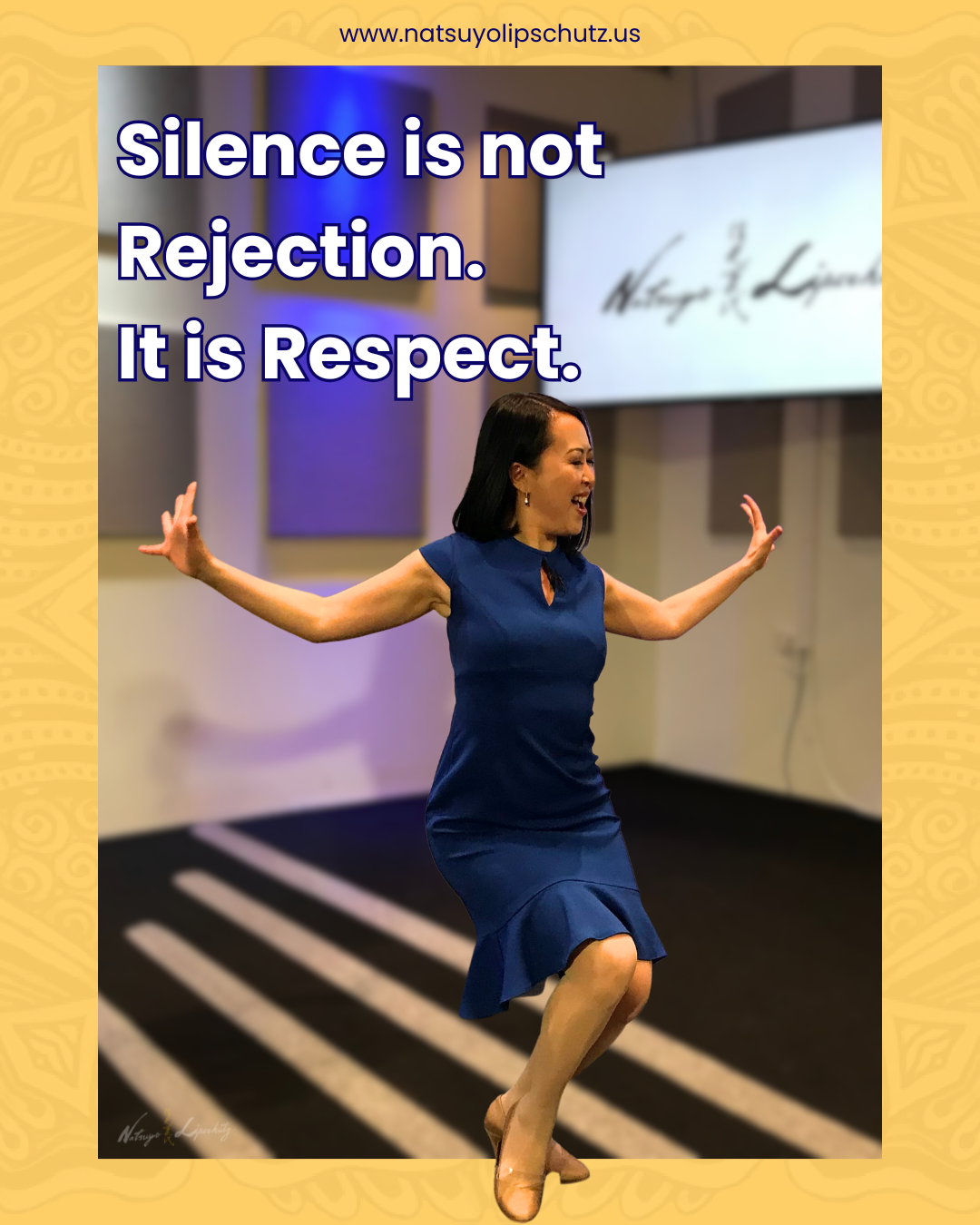
Why the most powerful move in an international deal has nothing to do with what you say.
—
In competitive ballroom Latin dancing
The hardest technique to master isn’t the footwork.
It isn’t the turns.
It isn’t the timing.
It is the pause.
A deliberate, controlled freeze in the middle of a high-energy routine.
Novice dancers panic in that moment.
They rush it.
They fill the space with extra movement.
They break the rhythm because stillness feels like failure.
The best dancers in the world?
They own it.
They let the silence do the work.
—
The exact same thing happens in executive negotiations.
And most leaders are novice dancers.
—
Here is the scenario I see constantly.
A negotiator presents a contract price.
The room goes quiet.
Five seconds pass.
And the instinct kicks in immediately.
“Of course, that price is negotiable…”
“We can also adjust the timeline if needed…”
“I just want to make sure this works for everyone…”
Before the other side has said a single word
The negotiator has already started dismantling their own offer.
Not because the deal was rejected.
Because the silence felt unbearable.
—
Here is what that silence actually meant.
In many Asian and European business cultures
Silence after a high-stakes proposal isn’t resistance.
It isn’t hesitation.
It isn’t a signal to lower your price.
In Japan, pausing after an offer signals that the speaker’s words are being taken seriously.
Rushing to respond is viewed as impulsive.
Superficial.
A sign that you haven’t thought deeply enough about what was just proposed.
Maintaining composure during silence demonstrates strength.
Maturity.
Discipline.
When a fast-paced Western negotiator collides with a reflective counterpart
The Western negotiator reads silence as rejection.
The other side reads the rushed response as desperation.
Both walk away with the wrong read.
And the deal suffers for it.
—
Three moves to master the micro-pause
State your terms and stop.
Say your number clearly.
No hedging language.
No preemptive apologies.
No “I know this might seem like a lot but…”
Put your pen down.
Lean back.
Let the offer sit in the room.
Count to five before you speak again.
When the silence arrives
Count to five slowly in your head.
Remind yourself of one thing:
Silence is not a rejection.
It is processing.
And processing means they are taking you seriously.
When in doubt, ask a question.
If the silence extends and you need to break it
Never lower your price.
Never change your terms.
Ask an open-ended exploratory question instead.
“How does that structure align with your expectations for this quarter?”
That one question re-opens the conversation.
Without giving away a single inch of leverage.
—
The bottom line
Silence is a tool.
Not a threat.
When you learn to embrace the micro-pause
You gain control of the negotiation rhythm.
You show respect for how the other side processes.
And you negotiate from the one position that always wins.
Calm authority.
—
Do you tend to fill the silence or lean back and let it breathe?
Tell me in the comments. I read every single one.
Subscribe to The Culture of One™ newsletter for weekly insights on global leadership, cross-cultural negotiation, and strategic communication that works across every boundary.